The Theory and Practice of Oligarchical Collectivism
The Theory and Practice of Oligarchical Collectivism is the outlawed, heretical book attributed to Emmanuel Goldstein, the Party's legendary enemy. Known simply as "the book," it circulates clandestinely among dissidents and is the only systematic exposé of the Party's true nature. It serves as the theoretical foundation of the underground Brotherhood and provides Winston Smith with the intellectual framework for his rebellion. Its existence as a forbidden text underscores the Party's control over knowledge and history.
Identity and Physical Description
The book is a heavy black volume, amateurishly bound, with no name or title on the cover. The print is slightly irregular, and the pages are worn at the edges, as if it has passed through many hands. The title page reads "THE THEORY AND PRACTICE OF OLIGARCHICAL COLLECTIVISM by Emmanuel Goldstein." It is rumored to be a compendium of all heresies, and its possession is a capital crime. Winston acquires a copy through a clandestine exchange arranged by O'Brien, and he reads it in the room above Mr Charrington's shop.
Contents and Arguments
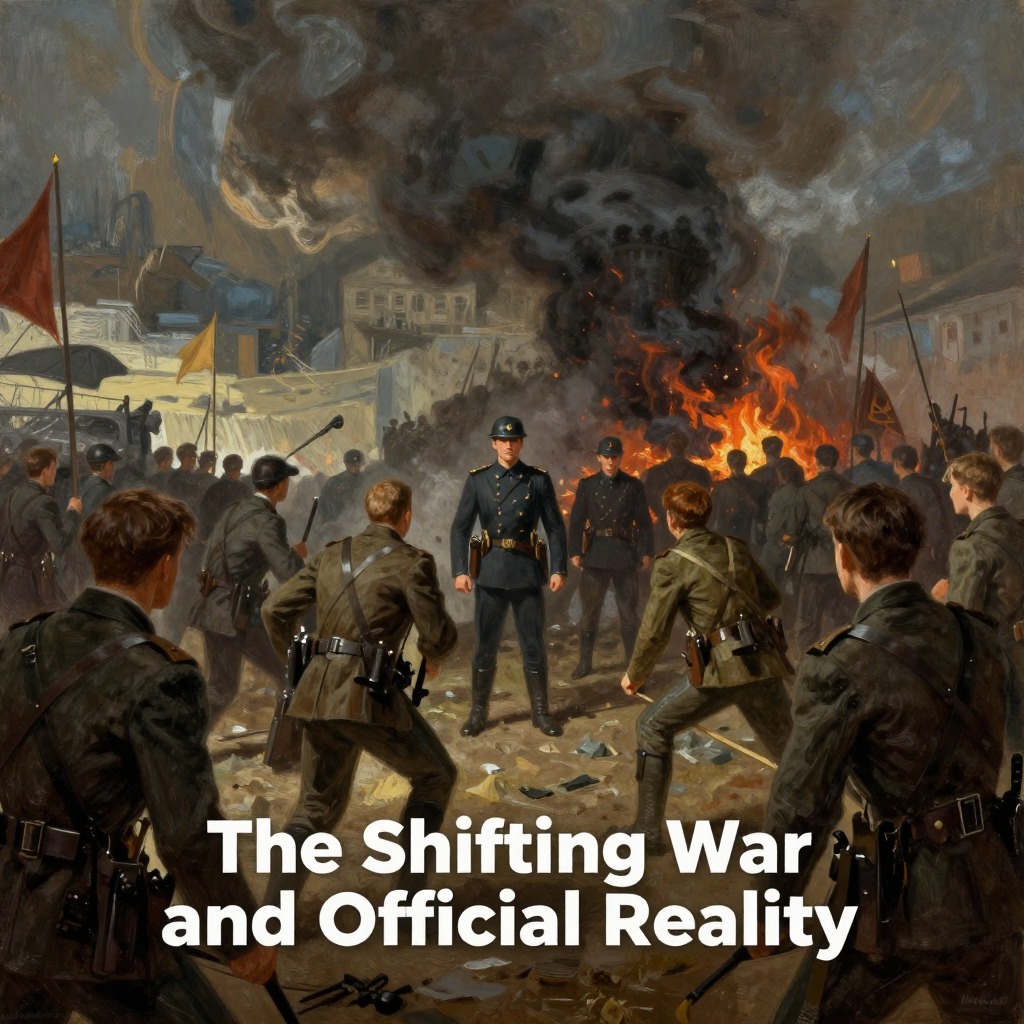
The book is divided into chapters that correspond to the Party's slogans. It argues that the essential structure of society has never changed: there are always the High, the Middle, and the Low. The Party's aim is to perpetuate this hierarchy by keeping the masses in poverty and ignorance and by waging continuous war to consume surplus production. The book explains the techniques of doublethink, the control of the past, and the role of the Thought Police. It claims that the war between the three superpowers is a sham, waged by each ruling group against its own subjects. The ultimate goal of the Party is not material benefit but pure power, exercised through the infliction of pain and the destruction of individuality.
Role in the Plot
Winston receives the book from O'Brien, who later claims to have written it himself. Reading it, Winston experiences a sense of recognition and reassurance, as it articulates his own scattered thoughts. The book confirms his belief that the Party is a fraud and that the proles are the only hope for the future. However, the book's program is later revealed to be a lie: O'Brien tells Winston that the proletarians will never revolt and that the book's optimism is nonsense. The book thus becomes part of O'Brien's trap, luring Winston into deeper commitment before his arrest. During Winston's interrogation, O'Brien destroys a photograph that contradicts the Party's version of history, demonstrating the fragility of the truth that the book represents.
Thematic Significance
The book serves as a vehicle for Orwell's own political analysis within the novel, providing a systematic critique of totalitarianism that mirrors the themes of Nineteen Eighty-Four. The book's existence as a forbidden text highlights the Party's control over knowledge, while its eventual destruction symbolizes the suppression of truth. The appendix, "The Principles of Newspeak," which is written in the past tense, suggests that the Party's domination may not be permanent, offering a glimmer of hope. The book thus functions as a meta-text, reflecting the novel's own commitment to truth and the struggle against power.